


How Thermoplastic Piping and Plate Heat Exchangers Work Together in Industrial Fluid Systems
 Sep 18, 2026|
 View:1
Modern industrial fluid systems rarely depend on a single piece of equipment. In chemical processing, water treatment, pharmaceutical production, electroplating, semiconductor manufacturing and other industrial applications, reliable operation requires different components to work together as one complete system.
Thermoplastic pipes, pipe fittings and valves are responsible for transporting and controlling process fluids, while heat exchangers manage heating, cooling and heat recovery. When these components are properly selected and maintained, the entire fluid system can operate more efficiently and with greater reliability.
The Role of Thermoplastic Piping in Industrial Fluid Systems
Industrial piping systems may handle water, acids, alkalis, chemical solutions and other corrosive fluids. In these applications, corrosion resistance and chemical compatibility are important considerations when selecting piping materials.
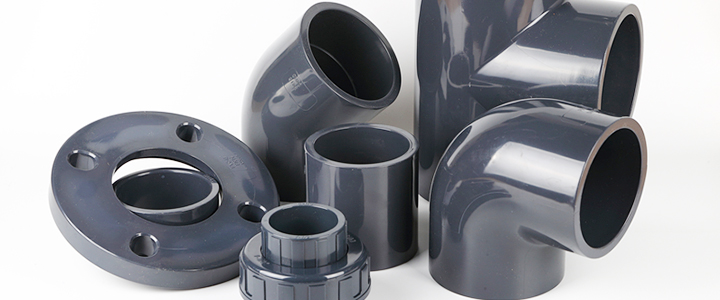
Thermoplastic materials such as PVC, CPVC, PPH and PVDF are widely used in industrial fluid handling because they can provide good chemical resistance while remaining relatively lightweight and easy to install.
Valves are another important part of the system. Ball valves, butterfly valves, check valves and automated valves control flow direction, flow isolation and operating conditions throughout the process.
Together, pipes, fittings and valves create the circulation network that connects pumps, tanks, filters, dosing systems and heat transfer equipment.
Why Heat Exchange Is Often Required in the Same System
Controlling fluid movement is only part of an industrial process. Many applications also require precise temperature management.
For example, chemical solutions may need to be cooled before entering another production stage. Process water may require heating before cleaning or production. Wastewater systems may recover heat before treatment, while industrial cooling loops continuously remove heat generated by machinery or manufacturing processes.
A plate heat exchanger can provide this heating or cooling function without directly mixing the two fluid circuits.
The compact structure and high heat transfer efficiency of plate heat exchangers make them suitable for many industrial applications where installation space and energy efficiency are important.
How Pipes, Valves and Plate Heat Exchangers Work Together
A typical industrial circulation system may contain a storage tank, pump, piping network, control valves and plate heat exchanger.
The pump moves the process fluid through the pipeline. Valves regulate or isolate the flow, while the plate heat exchanger transfers heat between the process circuit and a separate heating or cooling circuit.
This means that piping products and plate heat exchangers should not be considered independently.
A properly designed piping system helps maintain stable flow through the heat exchanger, while correctly selected valves allow operators to isolate the unit for inspection, cleaning or maintenance.
For corrosive applications, thermoplastic piping may also be used around the heat exchanger system where the process medium and operating conditions permit.
Common Applications for Integrated Fluid and Heat Transfer Systems
The combination of corrosion-resistant piping systems and plate heat exchangers can be found in many industrial environments.
In water treatment systems, piping and valves transport process water and treatment chemicals, while heat exchangers can be used for cooling, heating or energy recovery.
Chemical processing plants may use corrosion-resistant pipe systems for transferring aggressive media while plate heat exchangers regulate process temperatures.
Similar system concepts can also be found in pharmaceutical manufacturing, electroplating, PCB production, industrial cooling systems and other facilities that require both controlled fluid transfer and temperature regulation.
Because operating conditions vary significantly between industries, materials for pipes, valves, heat exchanger plates and sealing components should always be selected according to the actual medium, temperature, pressure and chemical compatibility requirements.
Maintenance Is Important for Long-Term System Reliability
Even when the piping network is working correctly, the heat exchanger itself requires periodic inspection.
Plate heat exchangers operate with multiple heat transfer plates and sealing gaskets. Over time, gaskets can age because of temperature, pressure and chemical exposure, while heat exchanger plates may become fouled or damaged depending on operating conditions.
Regular maintenance can help prevent unexpected leakage, reduced heat transfer efficiency and unplanned shutdowns.
When an existing Sondex plate heat exchanger requires maintenance, compatible replacement plates and gaskets may provide a practical alternative for industrial users. Senovis PHE supplies compatibleSondex spare parts, including replacement heat exchanger plates and gaskets for different maintenance and replacement requirements.
Before replacement parts are selected, users should confirm the heat exchanger model, plate quantity, plate material, plate thickness, gasket material and operating conditions whenever possible.
Material Compatibility Should Be Considered Across the Entire System
One common mistake in industrial fluid system design is evaluating each component separately.
For example, selecting corrosion-resistant piping does not automatically mean every component in the system is suitable for the same chemical medium. Valves, seals, pumps, heat exchanger plates and heat exchanger gaskets may all use different materials.
The complete fluid path should therefore be reviewed before equipment is installed or replacement components are ordered.
For plate heat exchangers, common plate materials include stainless steel and titanium, while gasket materials may include NBR, EPDM and FKM depending on the medium and operating temperature.
For thermoplastic piping systems, PVC, CPVC, PPH and PVDF each have different temperature and chemical-resistance characteristics.
Matching these materials correctly helps improve the service life of the complete system.
Designing Industrial Fluid Systems as a Complete Process
Efficient industrial fluid handling requires more than choosing individual pipes, valves or heat exchangers.
Engineers should consider how fluid moves through the complete process, how temperature changes during operation, which materials contact the process medium and how equipment will be isolated for future maintenance.
Thermoplastic piping and valve systems provide an effective solution for fluid transportation and flow control in many corrosive environments. Plate heat exchangers complement these systems by providing compact and efficient temperature control.
When these components are properly selected and maintained, they can form a reliable industrial fluid management system suitable for water treatment, chemical processing, pharmaceutical production and many other industrial applications.
For engineers and maintenance teams, considering piping, flow control and heat transfer equipment as parts of the same system can help improve operational reliability while making future inspection, maintenance and component replacement easier.

