Apr 24, 2026
 View:501
When managing water systems, chemical processing lines, or industrial fluid control, choosing the right valve can make the difference between smooth operation and costly downtime. PVC ball valves have become essential components in countless applications, offering reliable shut-off capabilities and chemical resistance at affordable prices. However, not all valves are created equal. Understanding the different types of PVC ball valves available helps operators, engineers, and facility managers select the perfect solution for their specific needs. This comprehensive guide breaks down each valve type, compares their features, and provides practical insights to simplify your decision-making process.
Key Takeaways
True union ball valves offer the easiest maintenance with removable components, ideal for systems requiring frequent inspection
Compact ball valves provide space-saving solutions for residential and light commercial applications
Three-way valves enable flow diversion or mixing, essential for complex piping configurations
Socket and threaded connections each serve different installation requirements and pressure ratings
Material selection between Schedule 40 and Schedule 80 PVC affects pressure capacity and durability
Understanding PVC Ball Valve Fundamentals
A PVC ball valve operates through a simple yet effective mechanism: a spherical ball with a bore through its center rotates 90 degrees to open or close the flow path. This quarter-turn operation provides quick shut-off capabilities that make these valves indispensable in fluid control systems. The valve body, constructed from polyvinyl chloride, offers excellent resistance to corrosion, acids, and alkalis, making it suitable for diverse environments from municipal water treatment to chemical processing facilities.
The construction typically includes a valve body, ball element, seats, seals, stem, and handle or actuator. When the handle turns perpendicular to the pipe, the valve closes; when parallel, it opens fully. This full-port design in many models ensures minimal pressure drop across the valve, maintaining system efficiency. According to industry standards established by organizations like ASTM International, PVC valves must meet specific performance criteria for pressure ratings, temperature ranges, and chemical compatibility.
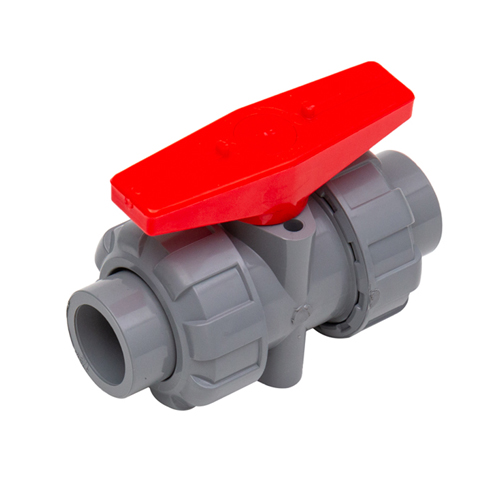
True Union Ball Valves: The Maintenance Champion
Design and Construction Features
True union ball valves represent the premium tier of PVC valve design, featuring union connections on both inlet and outlet sides. This configuration allows complete valve removal without cutting or disassembling the pipeline. The valve body separates into three main sections: two end connectors with union nuts and a central body housing the ball assembly. This modular design proves invaluable in systems where regular maintenance, inspection, or valve replacement becomes necessary.
The union design incorporates EPDM or FKM O-rings that create leak-proof seals between sections. These seals withstand pressures up to 150 PSI in standard configurations, with some heavy-duty models handling even higher ratings. The ability to disassemble the valve means operators can replace worn seats, seals, or even the entire ball assembly without system shutdown or pipe modifications.
Practical Applications
Industrial facilities favor true union ball valves in chemical dosing systems, water treatment plants, and anywhere valve servicing occurs frequently. Pool and spa installations particularly benefit from this design, as seasonal maintenance becomes straightforward. The higher initial investment pays dividends through reduced labor costs during repairs and extended system uptime.
Compact Ball Valves: Space and Cost Efficiency
Size and Installation Advantages
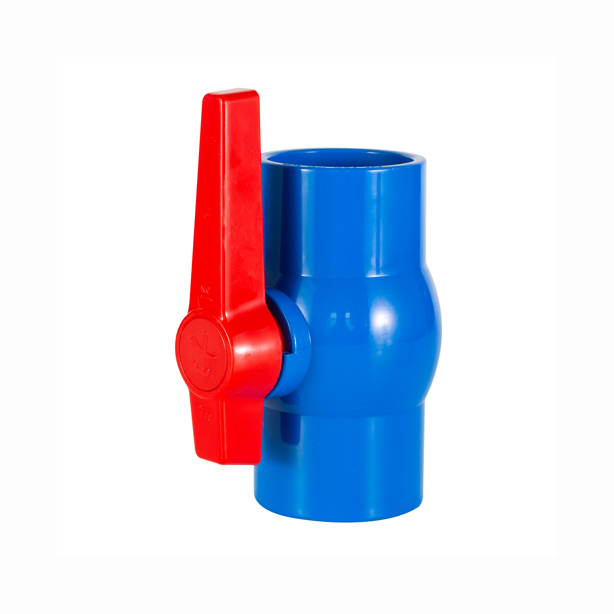
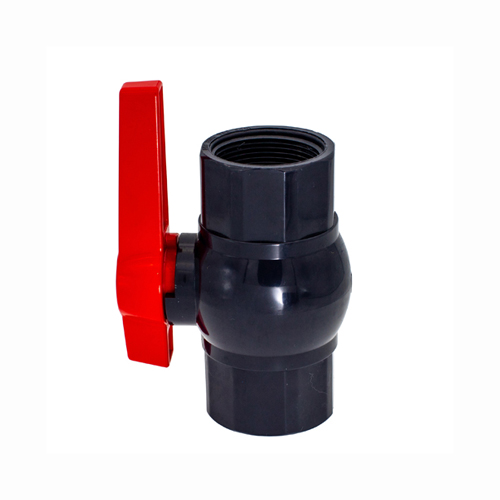
Compact PVC ball valves, also called standard or economy valves, feature a streamlined one-piece or two-piece body design without union connections. These valves integrate directly into the piping system through socket weld or threaded connections, creating permanent or semi-permanent installations. Their smaller footprint makes them ideal for confined spaces where every inch matters.
The simplified construction reduces manufacturing costs, making compact valves the economical choice for applications requiring numerous shut-off points. Despite their smaller size, quality compact ball valves maintain excellent sealing performance and durability. They typically handle pressures from 100 to 150 PSI depending on size and schedule rating.
Best Use Cases
Residential plumbing systems, irrigation networks, and light commercial applications commonly employ compact ball valves. Their permanent installation suits systems where valve removal rarely becomes necessary. Landscape irrigation controllers, aquarium systems, and basic water distribution networks benefit from their cost-effectiveness and reliable performance.
Three-Way Ball Valves: Flow Direction Control
Operational Configurations
Three-way ball valves introduce sophisticated flow control through three ports typically labeled A, B, and C. The internal ball features an L-port or T-port configuration that determines flow patterns. L-port designs allow flow between two ports at a time, functioning as diverter valves that redirect flow from one outlet to another. T-port configurations permit flow between all three ports simultaneously, enabling mixing or distribution applications.
The valve handle position directly correlates with active flow paths. A 90-degree rotation switches between configurations, providing quick response in dynamic systems. This versatility eliminates the need for multiple two-way valves and complex piping arrangements, simplifying system design and reducing potential leak points.
Industrial and Commercial Applications
Chemical processing facilities use three-way valves to alternate between different supply tanks or redirect waste streams. HVAC systems employ them for temperature control by mixing hot and cold water streams. Pool systems utilize these valves to switch between filtering and backwashing modes. Understanding whether your application requires diversion or mixing determines the appropriate port configuration selection.
Need Expert Guidance on PVC Valve Selection?
XITA's engineering team helps you identify the perfect valve solution for your specific application. Get professional recommendations backed by over a decade of industry experience.
Request a Free ConsultationConnection Types: Socket vs. Threaded
Socket Weld Connections
Socket connections create permanent bonds through solvent cementing, where PVC cement chemically fuses the pipe and valve socket. This method produces joints as strong as the pipe itself, with no mechanical parts to loosen over time. The smooth interior transition minimizes turbulence and pressure loss, maintaining optimal flow characteristics.
Installation requires proper surface preparation, appropriate primer application, and correct cement selection based on pipe diameter and ambient temperature. According to guidelines from the Plastics Pipe Institute, properly executed solvent-cemented joints achieve full strength within 24 hours and withstand maximum system pressure ratings.
Threaded Connections
Threaded PVC ball valves feature NPT (National Pipe Thread) connections that allow mechanical assembly without solvents or heat. This removable connection method suits applications where future valve replacement without pipe cutting becomes desirable. Thread sealant tape or paste ensures leak-proof connections while maintaining the ability to disassemble.
However, threaded connections introduce potential weak points. Over-tightening can crack PVC threads, while under-tightening causes leaks. Proper installation requires careful torque control and quality thread sealants rated for PVC applications. These valves typically handle slightly lower pressure ratings than socket versions due to the mechanical connection limitations.
| Connection Type | Installation Method | Pressure Rating | Removability | Best Applications |
|---|---|---|---|---|
| Socket Weld | Solvent Cement | Up to 150 PSI | Permanent (requires cutting) | High-pressure systems, permanent installations |
| Threaded NPT | Mechanical Threading | Up to 100 PSI | Removable with tools | Accessible locations, temporary systems |
| True Union | Union Nut Assembly | Up to 150 PSI | Easily removable | Maintenance-intensive applications |
| Flanged | Bolt-on Flanges | Varies by size | Removable with bolts | Large diameter, industrial systems |
Material Grades: Schedule 40 vs. Schedule 80
Wall Thickness and Pressure Capacity
Schedule ratings define the wall thickness of PVC components. Schedule 40 represents standard-duty applications with moderate pressure requirements, typically rated for 100-140 PSI at room temperature depending on valve size. Schedule 80 features thicker walls, supporting higher pressures up to 150-200 PSI while maintaining the same outer diameter as Schedule 40.
The increased wall thickness in Schedule 80 provides additional strength for demanding applications, though it slightly reduces the internal flow area. Both schedules offer identical chemical resistance, with performance degradation occurring similarly under exposure to incompatible substances or excessive temperatures.
Temperature Considerations
PVC material properties change with temperature. At 73°F (23°C), valves achieve maximum rated pressure. As temperature increases, pressure ratings decrease proportionally. At 140°F (60°C), the maximum recommended operating temperature for PVC, pressure capacity drops to approximately 22% of the room temperature rating. Resources from regulatory agencies provide detailed de-rating charts for specific applications.
Applications involving heated fluids require careful valve selection with appropriate safety margins. Cold water systems, ambient temperature chemical handling, and standard irrigation all safely operate within Schedule 40 capabilities, while high-pressure steam condensate or pressurized hot water systems necessitate Schedule 80 or alternative materials.
Actuated vs. Manual Operation
Manual Handle Designs
Standard manual ball valves feature lever handles that provide mechanical advantage for easy quarter-turn operation. Handle materials include PVC for chemical resistance or ABS plastic for improved impact resistance. Some models incorporate locking mechanisms or position indicators for safety and operational clarity.
Ergonomic handle designs reduce operator fatigue in systems requiring frequent valve adjustments. Color-coded handles help distinguish different fluid circuits in complex installations, while handle stops prevent over-rotation that could damage internal components.
Automated Actuation Options
Electric, pneumatic, or hydraulic actuators transform manual valves into remotely controlled devices. Mounting pads on valve stems accept standard actuators, enabling integration with building management systems, SCADA networks, or process control platforms. Automated PVC ball valves support applications from simple timer-based irrigation to sophisticated industrial process control.
Actuator selection depends on available utilities, response time requirements, and fail-safe positioning needs. Pneumatic actuators offer fast response and intrinsic safety in explosive atmospheres, while electric actuators provide precise positioning and easier integration with digital control systems.
Specialty Variants and Niche Applications
Double Union Ball Valves
Similar to true union designs but featuring unions on both sides of the valve body plus a third central union, double union ball valves offer maximum serviceability. This configuration allows individual component replacement without disturbing adjacent piping, though the increased complexity and cost limit their use to critical applications.
Multi-Port Ball Valves
Four-way and five-way configurations extend flow control possibilities beyond standard three-way valves. These specialized components suit complex distribution systems where multiple flow paths must be managed through a single control point. Chemical processing and laboratory systems frequently employ multi-port designs to minimize footprint while maximizing flexibility.
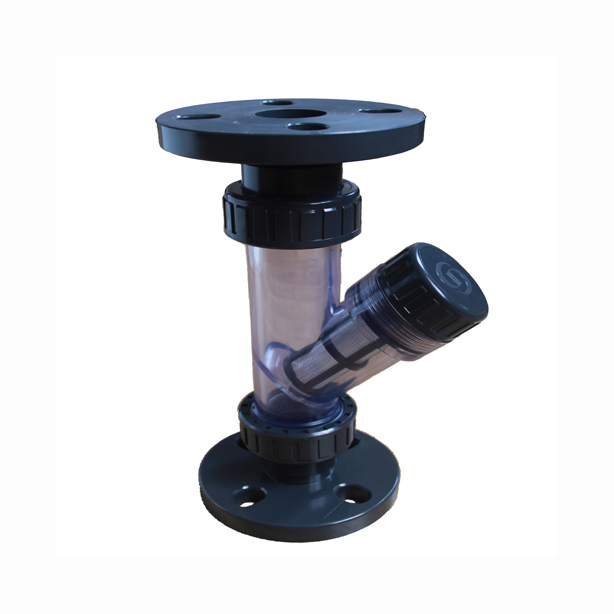
Clear Body Inspection Valves
Transparent PVC construction allows visual monitoring of fluid conditions, particulate presence, or flow verification. Water treatment facilities and laboratory applications benefit from this visibility, enabling quick assessment without flow interruption or sensor installation.
| Valve Type | Port Configuration | Primary Advantage | Typical Pressure Range | Cost Category |
|---|---|---|---|---|
| Compact Ball Valve | 2-way | Cost efficiency, compact size | 100-150 PSI | Economy |
| True Union Ball Valve | 2-way | Easy maintenance, removable | 100-150 PSI | Premium |
| Three-Way Ball Valve | 3-way (L or T port) | Flow diversion/mixing | 100-140 PSI | Mid-range to Premium |
| Double Union Ball Valve | 2-way | Maximum serviceability | 100-150 PSI | Premium Plus |
Selection Criteria for Optimal Performance
Application Assessment
Begin valve selection by documenting system parameters: fluid type, operating pressure, temperature range, flow rate requirements, and frequency of operation. Chemical compatibility charts verify PVC suitability for your specific fluid, as certain solvents, aromatic hydrocarbons, and chlorinated compounds can degrade PVC materials.
Consider installation environment factors including available space, accessibility for maintenance, UV exposure for outdoor installations, and ambient temperature extremes. These factors influence both valve type selection and supplementary protection requirements like UV-resistant coatings or insulation.
Sizing Considerations
Proper valve sizing matches pipe diameter to maintain consistent flow velocity and minimize pressure loss. Undersized valves create bottlenecks that increase pumping costs and reduce system efficiency. Oversized valves add unnecessary expense and may cause flow control difficulties in precision applications.
Flow coefficient (Cv) values quantify valve flow capacity, with higher numbers indicating greater flow potential. Match the valve Cv to your system's flow requirements, accounting for the valve's position in the open state and any partial-open operation scenarios.
Certification and Standards Compliance
Quality PVC ball valves meet industry standards such as NSF-61 for drinking water contact, ASTM D1784 for PVC material properties, and various pressure testing protocols. Certifications from recognized testing organizations provide assurance of performance and safety compliance. Documentation from entities like NSF International verifies product suitability for specific applications, particularly critical in potable water and food processing systems.
Making the Right Choice for Your System
Selecting among the different types of PVC ball valves requires balancing performance requirements, budget constraints, and long-term maintenance considerations. True union designs excel in maintenance-intensive environments, while compact valves provide economical solutions for straightforward shut-off applications. Three-way configurations simplify complex flow control, and proper connection type selection ensures installation success.
Material grade choice between Schedule 40 and Schedule 80 depends on operating pressure and safety margins required. Automation options extend functionality into remote and automated systems, while specialty variants address unique challenges in niche applications.
When seeking reliable PVC valve solutions backed by technical expertise and quality manufacturing, XITA delivers comprehensive product lines designed for diverse industrial, commercial, and municipal applications. The company's engineering support helps match valve specifications to exact application requirements, ensuring optimal performance and longevity.
Frequently Asked Questions
True union ball valves feature removable union connections on both ends, allowing complete valve removal without cutting pipes. Compact ball valves integrate directly into piping through permanent socket or threaded connections, offering cost savings but requiring pipe cutting for replacement.
PVC ball valves can handle warm water up to 140°F (60°C), though pressure ratings decrease significantly with temperature increases. For consistent hot water above 100°F, CPVC or metal valves provide better long-term performance and higher temperature ratings.
L-port valves divert flow between two outlets, ideal for switching between destinations. T-port valves allow simultaneous flow to multiple outlets, suited for mixing or distribution applications. Your flow control requirements determine the appropriate configuration.
Socket connections provide higher pressure ratings and permanent installation strength, best for high-pressure systems. Threaded connections offer removability and easier installation but handle lower pressures and require careful installation to prevent thread damage or leaks.
Schedule 40 suffices for most residential and light commercial applications under 100 PSI. Schedule 80 provides thicker walls for high-pressure industrial systems, abrasive fluids, or applications requiring additional safety margins. Match the schedule to your maximum operating pressure with appropriate safety factors.
Quality PVC ball valves last 15-25 years in properly designed systems with compatible fluids. Lifespan depends on operating conditions, cycle frequency, fluid compatibility, and maintenance practices. UV exposure reduces outdoor valve life without protective coatings.