


What does a PVC check valve do to protect water systems in 2026?
 Aug 03, 2026|
 View:144
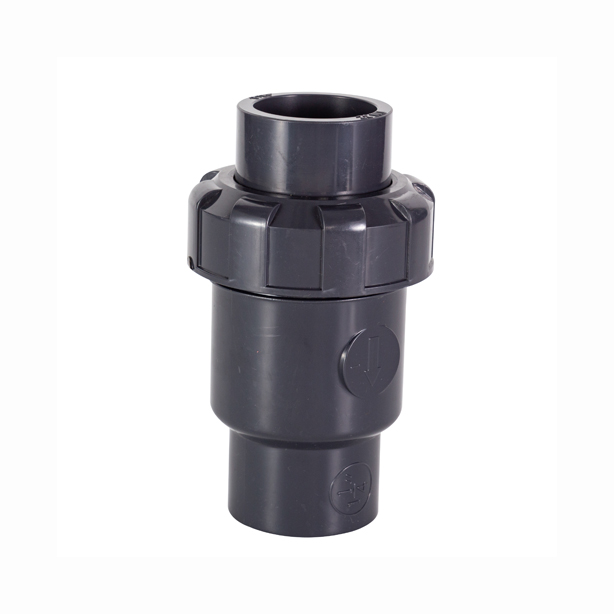
A PVC check valve operates automatically to stop water from flowing backward in piping systems. Forward water pressure opens the valve, and it seals tightly when line pressure drops. Building owners and engineers widely use these valves to prevent backflow in residential, commercial and industrial pipe networks.
Core System Benefits
Protecting pump motors from damage caused by backward spin
Stopping backflow from contaminating clean water supplies
Reducing damaging water hammer pressure spikes
Maintaining pump readiness for steady, reliable operation
These durable valves safeguard municipal water systems and protect factory piping installations across a wide range of applications.
Key Takeaways
PVC check valves stop backward water flow automatically, with no electricity required.
Fast-closing valve designs protect piping and block harmful pressure surges.
Stable line pressure prevents reverse spinning of pump motors, reducing burnout risk.
Reliable valve barriers prevent dirty water from entering clean drinking water lines.
Smooth plastic inner walls reduce water flow drag, supporting lower energy consumption.
Lightweight plastic material reduces handling costs and simplifies pipe installation.
Primary Functions of a PVC Check Valve
Automatic Backflow Prevention and Safety
A PVC check valve works independently, requiring no manual operation or electrical power. The device uses fluid pressure to control flow direction, making it suitable for both residential homes and large building systems.
Key Safety Benefit: Automatic response quickly mitigates sudden pressure changes. This self-actuating component protects pumps, stabilizes line pressure, and prevents contaminated water leakage.
Clean water flows forward under positive pressure. When upstream pressure drops, the valve closes rapidly. This fast shutoff keeps contaminated water from entering clean supply lines, maintaining safe municipal water quality.
Mechanical Response: Forward water pressure moves the internal sealing element.
System Protection: Reverse flow cannot reach and damage upstream pumps.
Contamination Control: Dirty water is blocked from entering clean piping.
How Internal Fluid Pressure Actuates the Valve
Water pressure drives the valve's moving parts. Forward flow pushes against the disc, fully opening the flow path for unobstructed water passage.
Reverse flow immediately shifts the pressure balance: upstream pressure falls while downstream pressure rises, forcing the disc tightly against the sealing seat.
| Mechanism Type | Action Upon Pressure Drop | Backflow Prevention Speed |
|---|---|---|
| Spring-Loaded PVC Check Valve | An internal spring pushes the disc shut immediately. | Very fast sealing stops reverse flow almost instantly. |
| Swing/Gravity Check Valve | Weight and back pressure swing the flap shut. | Slower closing speed compared to spring-loaded valves. |
Key Internal Components and Sealing Elements
Rigid PVC forms the valve body, providing strong resistance to chemical corrosion. Unlike metal alternatives, PVC does not rust or degrade from prolonged water contact.
Quality valves comply with leading safety standards such as BS EN ISO1452, ISO4422 and DIN8063, ensuring material safety for drinking water applications. Soft rubber sealing rings create a tight, leak-proof seal.
How a PVC Check Valve Protects Water Systems
Reliable piping systems depend on thoughtful mechanical design. Installing a PVC check valve adds critical protection for system lines: it suppresses large pressure shock waves, prevents total water loss from drained lines, and blocks cross-contamination from backflow.
Eliminating Water Hammer and Pressure Surges
Water hammer creates sudden, destructive force inside pipes. When fluid moves at high velocity and a pump shuts off abruptly, the moving water column slams against closed boundaries, generating extreme pressure spikes that can crack joints and damage weak piping.
Fast-closing check valves mitigate water hammer by sealing before reverse flow accelerates. High-performance designs can close in milliseconds, blocking backward flow and stopping shock waves before they cause damage.
For additional guidance on pressure surge management and distribution system protection, refer to established best practices from the American Water Works Association (AWWA).
Protecting Downstream Pumps and Preserving Prime
Pumps require water inside their chambers to generate suction. During shutdown, reverse flow can drain water from suction lines, leading to dry operation and motor burnout. Properly installed check valves prevent backflow and hold water at pump intakes to maintain prime.
Common issues that cause loss of prime include:
Air ingress via suction line leaks: Damaged joints allow air entry, weakening pump suction.
Dry operation and fluid level drop: Low water levels draw air into the system, damaging internal pump components.
Line blockages: Sediment buildup restricts flow and disrupts consistent suction.
Check/foot valve failure: Malfunctioning valves allow water to drain during shutdown.
Deteriorated seals: Worn seals create air gaps that disrupt normal priming.
Improper initial priming: Skipping startup filling procedures impairs suction performance.
Maintaining stable line pressure keeps pump components wetted, reducing motor replacement needs and costly service calls.
Preventing Cross-Contamination in Clean Water Supply
Safe water networks require physical separation between potable lines and potential contaminants. Cross-connections create significant health risks by allowing dirty liquid to flow backward during backflow events.
Regulatory standards mandate strict safety barriers to prevent back-siphonage and back-pressure conditions. The International Plumbing Code (IPC) and related standards outline approved backflow prevention devices and installation requirements.
| Regulatory Code / Standard | Purpose / Mandate | Approved Physical Backflow Preventers |
|---|---|---|
| 2021 International Plumbing Code (IPC) & IRC | Protect clean water supplies from reverse flow contamination. | Atmospheric Vacuum Breakers (AVB), Pressure Vacuum Breakers (PVB), Spill-Resistant Pressure Vacuum Breakers (SVB), and Reduced Pressure Principle assemblies (RP). |
| IPC Table 608.1 / IRC Table P2902.3 | Guard potable supply lines from cross-contamination hazards. | Listed backflow prevention assemblies including AVB, PVB, SVB, or RP units. |
Building operators must adhere to local cross-connection control policies. Public utilities enforce device requirements, and health departments provide regulatory oversight. Rules typically require annual safety testing of backflow devices, with prompt repair of faulty components.
Reducing Hydraulic Friction Loss
Smooth inner wall surfaces support efficient water flow with minimal resistance. Older iron valves have rough interior surfaces that impede flow, while smooth plastic check valves maintain low drag, reducing friction loss significantly.
Key Performance Advantage: Low friction allows water to move efficiently through the system, reducing pumping energy requirements and supporting lower operational energy costs.
Weight is another design benefit: plastic valves weigh roughly one-sixth of comparable cast-iron valves. Heavy metal valves often require cranes, extra mounting brackets and larger installation crews.
Lightweight PVC valves deliver key installation advantages:
Lower handling costs: Crews can move components without heavy lifting equipment.
Simplified pipe support: Suspended lines require fewer heavy-duty anchors.
Faster assembly: Solvent cement joining reduces overall installation time.
Sump pumps and irrigation systems operate under frequent cycling conditions. Rapid shutoffs create system stress as water rushes backward, spinning pump impellers in reverse. A sudden restart under these conditions generates extreme torque that can damage impellers and motors. Stopping reverse flow protects pump components and extends safe system operation for years.
Comparing Valve Types: Swing, Spring, and Ball Mechanisms
Different system configurations require specific internal valve designs. Selecting the right valve type ensures reliable backflow protection and long-term system performance.
Swing Check Valve Features and Gravity Dependence
A swing check valve uses a hinged flap. Forward water pressure lifts the flap open, while gravity and reverse flow pressure pull it closed again.
This design depends on correct physical orientation, as gravity helps seat the internal sealing element properly.
| Piping Orientation | Operational Mechanism | Feasibility & Functionality |
|---|---|---|
| Horizontal / Vertical Upward Flow | Forward water forces the flap open; gravity and backpressure pull it closed. | Permitted: Gravity assists in tight flap sealing. |
| Vertical Downward Flow | Gravity continuously pulls the disc toward the open position. | Prohibited: The flap cannot achieve a proper seal. |
Spring Check Valve Fast Closure Mechanics
A spring-loaded mechanism operates independently of gravity. An internal metal spring holds the disc in the closed position; incoming water pressure compresses the spring to open the valve.
The spring snaps shut immediately when pressure drops. This rapid action stops fast reverse flow and blocks damaging pressure shock waves. Spring valves can be installed in any orientation.
Ball Type Check Valve Flow Efficiency
A ball-type design uses a smooth spherical sealing element. Water pressure lifts the ball instantly, creating a clear flow path for water to pass through.
PVC ball check valves offer strong resistance to clogging. Moving water keeps the sphere in constant motion, which sweeps away sediment and debris from the sealing seat.
Spherical ball designs offer key system advantages:
Low maintenance: The self-cleaning ball action prevents debris buildup.
Minimal pressure drop: Open internal flow paths reduce flow resistance.
Orientation versatility: Internal guide tracks allow operation in multiple positions.
Swing vs. Spring vs. Ball Valve Comparison
Valve selection depends on fluid type, line pressure and piping direction. Each internal design handles backflow control differently.
| Valve Feature | Swing Mechanism | Spring Mechanism | Ball Mechanism |
|---|---|---|---|
| Internal Sealing Element | Swinging flap door | Spring-loaded disc | Rolling sphere |
| Required Piping Orientation | Horizontal or upward vertical flow | Any angle | Horizontal or upward vertical flow |
| Debris / Clog Resistance | Medium | Low | High |
| Closing Speed | Slow | Fast | Quick |
Swing-type valves use a hinged flap. Forward flow lifts it easily, and gravity closes it when pressure drops. This simple design works well for large-diameter pipes, though debris can become trapped in the mechanism.
Spring-type valves use a metal coil that drives fast disc closure. This quick action helps suppress water hammer, and the valves can be installed in any position.
Ball-type valves use a smooth sphere. Forward flow lifts the ball, and reverse flow seats it tightly against the seal.
Design Advantage: PVC ball-type check valves excel at clog resistance. Constant water flow spins the ball, sweeping away sediment and keeping the sealing seat clean. This reduces clog-related service calls and downtime.
General valve matching guidelines by piping orientation:
Horizontal pipelines: Swing, spring and ball types all work effectively.
Vertical upward pipelines: All three types perform reliably with upward flow.
Vertical downward pipelines: Only spring-type valves achieve proper sealing.
Ball valves offer extended service life in dirty water applications, thanks to self-cleaning action that reduces downtime. Spring-loaded valves are the best choice for suppressing fast pressure spikes and water hammer.
PVC Check Valve vs. Ball Valve Differences
Engineers often compare check valves and ball valves. Both are used in plastic piping systems, but they serve entirely different functions.
Automatic Self-Actuation vs. Manual Flow Isolation
A PVC check valve operates automatically: moving fluid opens the internal disc, and low pressure stops reverse flow immediately.
A ball valve requires manual operation: a handle rotates an internal sphere to start, stop or isolate flow.
| Operational Aspect | Automatic Check Valve | Manual/Actuated Ball Valve |
|---|---|---|
| Core Purpose | Stops backward fluid flow automatically. | Starts, stops, or isolates line flow manually. |
| Actuation Method | Self-acting; uses fluid pressure, gravity, or springs. | Requires human effort, electric, or pneumatic power. |
| Flow Direction | Strictly one-way flow only. | Allows two-way flow in normal operation. |
| Installation Access | Can be installed inside walls or underground. | Requires accessible space for manual operation. |
| Pressure Rating Range | Handles up to Class 600 pressure ratings. | Handles up to Class 2500 pressure ratings. |
Pressure Drops and Directional Flow Limits
Check valves enforce unidirectional flow only, with a molded arrow on the body indicating the correct flow direction. Reverse flow forces the valve into a fully closed position.
Ball valves allow bidirectional flow. Full-port ball designs minimize pressure drop, while PVC check valves create slightly higher flow resistance.
Integrating Both Valve Types in System Design
Modern water systems use both valve types. Strategic placement simplifies maintenance and improves system safety.
System Design Tip: Install ball valves on both sides of a check valve. This arrangement allows technicians to isolate the check valve for service without draining the entire pipeline.
Combining both valve types protects system equipment, keeps pumps safe during daily operation, and reduces repair downtime.
Troubleshooting and Maintenance Tips
Even quality valves require basic routine care. Regular inspections prevent major water leaks and system failures.
Common Failure Modes: Debris, Seal Wear, and Fatigue
Over extended use, sediment and sand can become trapped inside valves, preventing the disc from seating fully and creating leaks.
Rubber sealing rings lose elasticity over time. Harsh chemicals can degrade soft seal components, and repeated fast cycling can cause fatigue or cracking of internal parts.
Maintenance Alert: Small seepage often indicates trapped debris inside the valve. Prompt cleaning prevents larger system shutdowns.
Step-by-Step Inspection and Cleaning Guidelines
Technicians can service valve components following these steps:
Isolate the Line: Fully close isolation valves on both sides of the check valve.
Relieve Pressure: Drain all water from the valve section safely.
Disassemble the Unit: Unscrew union nuts to remove internal components.
Flush Contaminants: Rinse internal parts thoroughly with clean water.
Inspect Internal Parts: Check rubber seals for damage, wear or deformation.
Reassemble Carefully: Align sealing rings properly before tightening union nuts.
Repairing Seals vs. Full Valve Replacement
Operators can choose between minor part repair and full valve replacement, based on body condition and service hours.
| Service Scenario | Recommended Action | Primary Benefit |
|---|---|---|
| Minor Seal Degradation | Install replacement rubber sealing rings. | Lower cost compared to full hardware replacement. |
| Trapped Dirt / Clogs | Flush out the main valve chamber. | Restores full flow performance at minimal cost. |
| Cracked Body / Severe Wear | Install a new complete valve. | Ensures reliable, long-term safety performance. |
Plastic construction makes seal service quick. Union nut designs allow disassembly without pipe cutting. Visible body cracking indicates the need for full valve replacement.
Selection Criteria and Sourcing High-Quality Valves
Selecting appropriate valves supports long service life for water networks. Components must match specific piping configurations, pressure limits and regulatory material standards.
Connection Styles: Socket Union vs. Threaded Connections
Engineers select end connection styles based on serviceability needs. Socket union ends use solvent cement for fast, permanent pipe joining. Double union designs allow easy valve body removal for cleaning or service without cutting pipes.
Threaded connections work best for temporary or modular piping setups. Female threads screw onto male pipe ends, with thread sealant creating a tight, leak-resistant connection.
| Connection Style | Primary Joining Method | Main Operational Advantage |
|---|---|---|
| Socket Union | Solvent Cement / Chemical Joining | Fast assembly; easy body removal for inspection and cleaning |
| Threaded | NPT / Male Thread Screw Connection | Simple disassembly; strong mechanical connection |
Pressure Ratings and Standard Compliance
Continuous water flow creates sustained force on piping components. High-quality systems use PN16 rated valves, capable of handling 1.6 MPa water pressure, providing robust protection for municipal and industrial lines.
Established standards ensure plastic piping safety and consistency:
BS EN ISO1452 & ISO4422: Standardizes plastic piping dimensions for water supply applications.
DIN8063: Defines dimensional specifications for unplasticized polyvinyl chloride fittings.
GB/T1002.2: Validates component structural strength and pressure performance limits.
Drinking water systems require safe, non-toxic materials. Certified valves help maintain clean, safe municipal water quality.
Sourcing Solutions from XITA
High-quality raw material is the foundation of durable piping performance. XITA Plastic uses premium virgin PVC material to produce valves with strong structural walls, delivering reliable resistance to harsh chemicals and corrosion.
High-quality virgin PVC material delivers durable, long-lasting performance under standard operating conditions. Choosing certified, compliant components helps reduce routine maintenance frequency and lower long-term system lifecycle costs.
For applications requiring reliable flow control, XITA's PVC Ball Type Check Valve combines high structural strength with low internal friction. The smooth internal flow chamber reduces hydraulic friction loss and resists debris accumulation.
Facilities select PVC check valves from XITA for industrial processing lines, agricultural irrigation systems, municipal water networks and environmental water treatment projects.
Need Reliable PVC Check Valves for Your Water System?
XITA offers a full range of certified plastic piping and valve solutions for municipal, industrial, agricultural and commercial applications. Our technical team can help you select the right valve type, size and connection style for your specific project requirements.
Request a Quote NowA PVC check valve is a critical component for modern water systems. It mitigates water hammer, stabilizes line pressure and stops backflow automatically. Choose from swing, spring or ball types based on your fluid type, operating pressure and piping orientation.
The right valve selection supports decades of reliable system operation. Partner with XITA for safe, durable plastic piping components tailored to your needs.
FAQ
How does a PVC check valve stop reverse flow?
Forward fluid pressure pushes the internal disc open. When reverse flow occurs, backpressure forces the sealing element closed immediately. This simple mechanism stops backflow automatically with no external power or manual operation required.
Can you install check valves vertically?
Installation Tip: Spring and ball check valves work reliably in vertical upward flow installations. Swing check valves require horizontal mounting for proper operation, as gravity is required for correct sealing. Always follow the directional flow arrow marked on the valve body.
What causes a check valve to leak?
Trapped Debris: Sand and sediment prevent the disc from fully seating.
Worn Seals: Chemical exposure and age degrade rubber sealing rings over time.
Mechanical Fatigue: Internal components wear out after extended cycling.
Regular cleaning keeps sealing surfaces smooth and maintains proper valve function.
Why select PVC over metal valves?
PVC valves never rust and offer strong chemical resistance. Smooth inner walls significantly reduce water friction loss. Lightweight plastic construction lowers labor and installation costs while maintaining reliable pressure performance.
How often should you inspect water system valves?
Inspect valves every 6 to 12 months. Checking internal seals helps prevent sudden failure events. Early debris removal protects piping safety and extends overall valve service life.
Do check valves stop water hammer entirely?
Fast-closing valve designs significantly reduce large pressure spikes. Spring-loaded mechanisms close before reverse flow can accelerate. Selecting valves with appropriate closing speeds helps suppress surges across sensitive piping networks.
References:
[1] American Water Works Association. Backflow Prevention & Distribution System Protection Guidelines.
[2] International Code Council. International Plumbing Code (IPC) — Plumbing Safety & Backflow Requirements.

