


 Jun 04, 2026
 View:533
Choosing PVDF valves for corrosive environments is not just about matching a valve to a pipe. Engineers must evaluate chemical compatibility, process conditions, and valve construction. Safety and reliability are critical — a valve failure can endanger workers and the environment. Features like secondary containment[1] and compliance with international safety standards are key to long-term performance.
Key Takeaways
PVDF valves offer outstanding resistance to strong acids, alkalis, and solvents — ideal for corrosive fluid handling.
Inspect PVDF valves monthly for cracks, discoloration, or leaks to ensure safe operation.
Match the valve type to your application: butterfly valves for fast shut-off, ball valves for tight seals, diaphragm valves for slurries and dirty fluids.
Always verify pressure and temperature ratings against your system's actual operating conditions.
XITA PVDF valves carry FDA, CE, and SGS certifications for food-grade, pharmaceutical, and industrial use.
True union designs allow valve removal without cutting pipes — saving time and reducing downtime.
Why Choose PVDF Valves for Corrosive Fluids
PVDF valves are the preferred choice in industries that handle aggressive chemicals. Their key advantages over competing materials are summarised below:
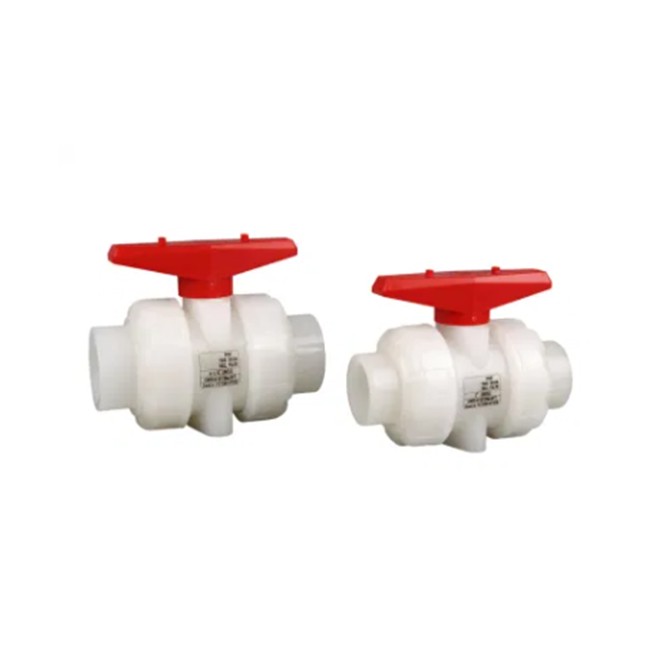
| Property | Description |
|---|---|
| Exceptional Chemical Resistance[2] | Withstands most acids, bases, solvents, and halogens — suitable for chemical processing and water treatment. |
| High Purity & Low Contamination | No stabilisers or plasticisers; essential for semiconductor and pharmaceutical applications. |
| Wide Thermal Range | Operates from −25 °F to +265 °F (−32 °C to 129 °C), covering most process requirements. |
| Superior Mechanical Strength | Greater rigidity and impact resistance than PTFE, enabling robust system construction. |
Chemical Resistance
PVDF is not degraded by strong acids, alkalis, or solvents. XITA PVDF Pneumatic Butterfly Valves are manufactured from virgin PVDF and feature a leak-proof, double-sealed structure that prevents dangerous spills and protects personnel.
Mechanical Strength
The inherent toughness of PVDF allows valves to handle high pressure and sudden impact loads. The XITA True Union Ball Valve's full-port design minimises flow resistance, while the true union feature allows removal for maintenance without pipe cutting — reducing downtime and operational costs.
Thermal Stability
PVDF retains its properties across a wide temperature window (−25 °F to 265 °F). The XITA PVDF Motorized Butterfly Valve performs reliably even during rapid temperature fluctuations, supporting continuous operation.
Note: PVDF valves are the preferred choice wherever ultra-pure fluids are required, including semiconductor fabs and pharmaceutical production lines, because they introduce no contamination into the process stream.
Common industries relying on PVDF valves include chemical processing plants, water treatment facilities, pharmaceutical production, and semiconductor manufacturing. XITA valves carry FDA food-grade and CE safety certifications.
PVDF Valve Selection Criteria
Chemical Compatibility
Fluid Types
PVDF resists the vast majority of aggressive chemicals, making it suitable for chemical plants and water treatment systems. Because PVDF contains no stabilisers or plasticisers, it maintains fluid purity — a critical requirement in pharmaceutical and food-grade applications.
The table below shows how PVDF performs against common corrosive chemicals[2]:
| Chemical | Performance in PVDF Valves |
|---|---|
| Sulfuric Acid (H₂SO₄) | Excellent up to 70% at 100 °C; avoid 98% concentration above 60 °C |
| Nitric Acid (HNO₃) | Good at room temperature; avoid concentrations above 70% at elevated heat |
| Hydrofluoric Acid (HF) | Dilute solutions acceptable; concentrated HF can cause significant damage |
Compatibility Testing
Engineers should consult chemical resistance charts and request manufacturer data sheets. For novel or blended chemical streams, laboratory testing is recommended. XITA supplies detailed data sheets for every valve in its range to support specification decisions.
Pressure & Temperature Ratings
Maximum Pressure
Most PVDF valves are rated at PN10 (10 bar / 145 psi) or PN16 (16 bar / 232 psi) at 20 °C. Pressure ratings decrease as temperature rises, so always consult the pressure-temperature (P-T) curve. PVDF valves are not suitable for high-pressure steam service.
| Pressure Rating | Value at 20 °C | Note |
|---|---|---|
| PN10 | 10 bar / 145 psi | Rating drops with rising temperature |
| PN16 | 16 bar / 232 psi | Rating drops with rising temperature |
Temperature Limits
PVDF valves operate safely from −30 °C to +150 °C, with short-term excursions up to 150 °C (302 °F).
| Material | Temperature Range |
|---|---|
| PVDF | −30 °C to +150 °C |
Tip: Evaluate both peak pressure and peak temperature simultaneously. Elevated temperature always reduces the allowable pressure rating.
Valve Types
Butterfly Valves
Butterfly valves are used for on/off control and throttling in large-bore pipework. XITA offers manual, pneumatic, and motorized variants. The XITA PVDF Pneumatic Butterfly Valve incorporates a double-sealed disc to eliminate leakage, while the motorized version integrates with PLC, DCS, and SCADA systems for remote operation.
Ball Valves
Ball valves provide a bubble-tight shut-off with minimal pressure drop. The XITA PVDF True Union Ball Valve features a full-bore design and a true union end connection that allows in-line removal without pipe cutting — ideal for high-purity semiconductor, pharmaceutical, and chemical services.
| Feature | Ball Valves | Butterfly Valves |
|---|---|---|
| Flow Regulation | Excellent control | Good on/off |
| Pressure Drop | Very low (full bore) | Moderate turbulence |
| Installation Space | Larger footprint | Compact footprint |
| Seal Integrity | Bubble-tight | May weep at high pressure |
| Best Pressure Range | High pressure | Lower pressure |
Diaphragm Valves
Diaphragm valves use a flexible membrane to isolate the flow path, making them ideal for slurries, acids, and aggressive media. The XITA PVDF Diaphragm Valve uses a welded body for a zero-leak construction and meets ISO 10931-2005, with SGS and CE certification. Its simple internals facilitate cleaning — an advantage for water treatment, mining, and chemical processing.
Note: Each valve type has distinct strengths. Select based on pipe size, fluid cleanliness, flow control requirements, and maintenance accessibility.
Maintenance & Service
Cleaning
Regular cleaning prevents chemical build-up and maintains flow performance. PVDF surfaces are inherently non-stick, simplifying cleaning. Recommended inspection points include:
Cracks, surface discoloration, or mechanical damage
Joints and connection points for residue accumulation
Deposits that restrict flow
Use clean water or chemically compatible solvents. For critical applications, ultrasonic inspection can detect subsurface defects.
Tip: Routine cleaning is especially important in food, pharmaceutical, and semiconductor environments where contamination control is mandatory.
Parts Replacement
XITA's true union ball valve design allows in-line removal, minimising system downtime. PVDF components last longer than metallic equivalents because they resist corrosion and wear.
| Maintenance Task | PVDF Valves (XITA) | Metal Valves |
|---|---|---|
| Cleaning | Simple, infrequent | Complex, frequent |
| Parts Replacement | Straightforward, rare | More involved, more frequent |
| Inspection | Visual checks sufficient | Detailed inspection required |
| Downtime | Low | Higher |
Safety & Compliance
Standards
XITA PVDF valves are designed and tested in accordance with major international standards[3]:
| Standard | Scope |
|---|---|
| REACH | Chemical substance safety — European Union |
| ASTM D3222 | Specification for unfused PVDF material |
| DIN 8077/8078 | Dimensions for plastic pipes and fittings |
| ISO 10931 | Quality requirements for plastic piping systems |
Certifications
| Certification | Application Area |
|---|---|
| FDA | Food processing and pharmaceutical production |
| CE | Industrial safety — European market |
| SGS | Independent quality and performance assurance |
Step-by-Step Guide to Selecting PVDF Valves
Step 1 — Assess Application Requirements
Begin by documenting operating conditions: fluid type, temperature, pressure, flow rate, and cycle frequency. Determine whether the fluid is clean or particulate-laden. This profile will drive every subsequent decision.
Record daily valve cycle count
Confirm maximum system pressure and temperature
Identify whether the fluid carries solids or is clean
Verify the valve meets the required service life under those conditions
Confirm factory testing has been performed by the manufacturer
Step 2 — Verify Chemical Compatibility
| Chemical Family | PVDF Compatibility | Notes |
|---|---|---|
| Acids | Excellent | Handles most strong acids |
| Alkalis | Excellent | Compatible with most alkalis |
| Solvents | Good | Verify for specialist solvents |
| Halogens | Good | Avoid high temperatures with chlorine |
| Hydrocarbons | Good | Check at operating pressure |
Always cross-reference your actual process conditions. For uncertain or mixed chemical streams, request XITA's detailed compatibility data sheets or conduct laboratory immersion testing.
Step 3 — Select the Valve Type
Butterfly valves: Large pipework, rapid isolation, space-constrained installations
Ball valves: Clean fluids, high-purity service, tight shut-off
Diaphragm valves: Slurries, particulate-laden or aggressive media
For automated systems, XITA's pneumatic and motorized PVDF valves offer direct integration with plant control platforms, improving safety by removing personnel from hazardous areas.
Step 4 — Verify Pressure and Temperature Ratings
Confirm the valve's rated pressure (PN10 or PN16) meets or exceeds system design pressure.
Check that the temperature range (−30 °C to +150 °C for XITA valves) covers all process scenarios.
Apply a safety margin if operating conditions fluctuate significantly.
Tip: If operating conditions are variable or uncertain, select a valve with a pressure and temperature rating above the expected maximum.
Step 5 — Plan Preventive Maintenance
| Strategy | Description |
|---|---|
| Biocide treatment[4] | Apply oxidising biocides (e.g., sodium hypochlorite) to prevent biofilm formation, reducing corrosion risk. |
| UV-stable PVDF grades | Select pigmented PVDF (e.g., Red Kynar) for outdoor or UV-exposed piping runs. |
| Socket fusion joining | Welded connections produce a homogeneous joint with zero leak paths and excellent long-term reliability. |
Step 6 — Confirm Regulatory Compliance
| Standard | Description |
|---|---|
| ISO 9001[3] | Quality Management System — ensures consistent product quality and traceability |
| ISO 5752 | Face-to-face dimensions for flanged valves — aids system integration |
| ANSI B1.20.1 | Pipe thread requirements — ensures interchangeability |
| ASTM D-1784 | Thermoplastic compound specifications — confirms material quality |
Step 7 — Finalise the Specification
Use the summary checklist below to confirm every criterion has been addressed before placing an order:
| Step | Action | XITA Advantage |
|---|---|---|
| Application Review | Confirm system specs | Wide product range to match any duty |
| Compatibility Check | Verify chemical resistance | Detailed data sheets per product |
| Valve Type Choice | Select best valve for the job | Butterfly, ball, diaphragm options |
| Ratings Verification | Confirm P&T limits | Clear labelling on every valve |
| Maintenance Plan | Ensure easy cleaning/repair | True union and welded designs |
| Compliance Check | Verify certifications | CE, FDA, SGS certified |
| Expert Consultation | Seek advice for complex duties | Technical support available |
Ready to Specify PVDF Valves for Your System?
Our engineering team will review your application requirements — fluid type, pressure, temperature, and flow conditions — and recommend the right PVDF valve solution. Certified products with full technical documentation are available for immediate enquiry.
Send an Enquiry NowPVDF Valves vs. Competing Materials
Performance Comparison
| Material | Max Temp (°F/°C) | Max Pressure (psi) | Chemical Resistance | Best Application |
|---|---|---|---|---|
| PVDF | 280 / 138 | 230 | Excellent | Corrosive, high-purity fluids |
| PTFE | 300 / 149 | 150 | Excellent | High temperature, ultra-pure fluids |
| PVC | 140 / 60 | 150 | Good | Low-temperature, low-pressure service |
| Stainless Steel | >300 / 149 | Very High | Moderate (not all acids) | High pressure, elevated temperature |
Note:PVDF valves offer the optimal balance of chemical resistance, mechanical strength, and purity for corrosive and clean-fluid duties.
Total Cost of Ownership
PVDF valves carry a higher initial purchase cost than PVC or polypropylene alternatives. However, their extended service life, reduced maintenance frequency, and lower downtime typically produce a lower total cost of ownership over a 5–10 year horizon. PVDF fittings can cost two to four times more than standard plastic equivalents, but replacement cycles are significantly longer.
| Material | Initial Cost | Maintenance | Replacement Frequency | Long-Term Value |
|---|---|---|---|---|
| PVDF | High | Low | Rare | Excellent |
| PVC | Low | Moderate | Frequent | Fair |
| Stainless Steel | Very High | Low | Rare | Excellent |
Environmental Considerations
PVDF has a favourable environmental profile relative to many engineering plastics. It is fully recyclable, produces lower lifecycle emissions than UPVC, and its extended service life reduces the frequency of valve replacement — reducing material consumption and waste generation. Proper end-of-life disposal is essential for all valve materials to protect the environment.
Common Selection Mistakes and How to Avoid Them
Ignoring Chemical Compatibility
Specifying a valve without verifying material compatibility with every chemical in the process stream is the most frequent and costly error. The table below summarises the principal failure modes and mitigation strategies:
| Failure Mode | Probable Cause | Mitigation |
|---|---|---|
| Body Corrosion | Incorrect material or damaged lining | Select PVDF or a chemically compatible lined valve |
| Seat Leakage | Chemical attack, particulate wear, or deformation | Choose a compatible seat material and appropriate valve type |
| Stem Leakage | Packing failure or stem corrosion | Review packing material; consider diaphragm valve design |
Tip: Undetected compatibility issues cause leaks, process contamination, and costly unplanned shutdowns. Always validate the complete chemical exposure matrix.
Overlooking Pressure and Temperature Ratings
Operating a PVDF valve beyond its rated pressure or temperature — even briefly — can cause permanent deformation, seal failure, or catastrophic rupture. XITA valves carry clear P-T ratings on every data sheet. When process conditions vary widely, select a valve rated above the expected maximum.
Selecting the Wrong Valve Type
Using a butterfly valve where a bubble-tight shut-off is required
Applying a ball valve in a slurry or high-solids stream
Installing a diaphragm valve in a service that exceeds its pressure rating
XITA's range covers manual, pneumatic, motorised, and true union designs across all three valve types. Contact the technical team if the application does not fit a standard product offering.
Neglecting Preventive Maintenance
Even PVDF valves require a structured maintenance programme. Chemical deposits, wear, and seal degradation can accumulate unnoticed until a failure occurs.
| Task | Frequency | What to Check |
|---|---|---|
| Visual inspection | Monthly | Cracks, discoloration, external leaks |
| Cleaning | Every 3 months | Chemical deposits, flow restriction |
| Seal inspection | Every 6 months | Wear, swelling, or damage |
| Parts replacement | As required | Stiff operation, seat leakage |
Ensuring Long-Term Reliability and Safety
Routine Inspection Programme
Implement a structured inspection schedule aligned with the maintenance table above. Engineers should document findings in a valve logbook to identify degradation trends before failures occur.
Operator Training
Personnel who operate, inspect, or maintain PVDF valves should be trained on:
Correct valve operation and manual override procedures
Lock-out / tag-out (LOTO) procedures for safe isolation
Chemical hazard awareness and PPE requirements
Emergency response procedures for leaks or spills
Manufacturer Partnership
Partnering with a reputable manufacturer reduces risk across the entire valve lifecycle. XITA factory-tests every valve prior to shipment, providing full material traceability and test documentation. When evaluating suppliers, look for CE, FDA, and SGS certification, the ability to supply matched actuators and control accessories, and responsive technical support.
System Upgrades
Ageing valve infrastructure should be reviewed periodically. Upgrading to current XITA PVDF valves delivers measurable improvements in safety, automation capability, and maintenance accessibility:
| Upgrade | Benefit | XITA Solution |
|---|---|---|
| Double-sealed body | Eliminates leakage paths | PVDF Pneumatic Butterfly Valve |
| Motorised actuation | Remote, automated flow control | Motorised Butterfly Valve |
| True union ends | In-line removal without pipe cutting | True Union Ball Valve |
| Certified materials | Regulatory compliance assured | CE / FDA / SGS certified valves |
Frequently Asked Questions
What makes PVDF valves ideal for corrosive environments?
PVDF resists strong acids, alkalis, and solvents without corroding. XITA PVDF valves use virgin PVDF to maximise chemical resistance and long-term reliability.
How often should PVDF valves be inspected?
Visual inspection should be carried out monthly, with deeper seal and cleaning checks on a quarterly to semi-annual basis.
Can PVDF valves handle high temperatures?
XITA PVDF valves are rated from −30 °C to +150 °C. Always consult the product data sheet for the specific valve in question.
Are XITA PVDF valves certified for food and pharmaceutical use?
Yes — XITA PVDF valves hold FDA, CE, and SGS certifications, confirming suitability for food-grade and pharmaceutical applications.
What valve types does XITA offer in PVDF?
XITA manufactures PVDF butterfly valves, ball valves, and diaphragm valves, available in manual, pneumatic, and motorised configurations.
Can PVDF valves integrate with automated control systems?
Yes. XITA pneumatic and motorised PVDF valves connect directly to PLC, DCS, and SCADA platforms, enabling safe remote operation and process automation.
References
U.S. Environmental Protection Agency — Emergency Response Planning & Secondary Containment: https://www.epa.gov/emergency-response/emergency-response-planning
Cylex Plastics — PVDF Pipes, Valves & Chemical Resistance to Strong Acids: https://cylexplastics.com/pvdf-pipes-valves-chemical-resistance-strong-acids/
International Organisation for Standardisation — ISO 9001 Quality Management Systems: https://www.iso.org/iso-9001-quality-management.html
Plant Engineering — Reduce Microbiological Activity with PVDF Piping: https://www.plantengineering.com/reduce-microbiological-activity-with-pvdf-piping/
ASTM International — Standard Specification for Polyvinylidene Fluoride (PVDF): https://www.astm.org/d3222-13r20.html

