


Forecast for PPH Pipe Fittings Market 2026-2031
 Aug 24, 2026|
 View:175
The global PPH pipe & fittings market is projected to reach approximately USD 2.5 billion in 2025, with further growth to USD 4.2 billion by 2034, reflecting a compound annual growth rate (CAGR) of about 6.2%, according to industry research.[1] For the forecast period 2026–2031, this growth trajectory continues, driven by industrialization and rising demand from chemical processing sectors. Industries such as water treatment and semiconductor manufacturing rely on PPH pipe system solutions for their corrosion resistance and purity characteristics. This market expansion offers opportunities for businesses making strategic investment decisions. Understanding this growth helps companies plan for future demand and supply chain needs.
Key Takeaways
The PPH pipe fittings market is projected to grow from an estimated USD 2.5 billion in 2025 toward USD 4.2 billion by 2034.
This growth represents a CAGR of approximately 6.2% over the projection period.
Chemical processing and water treatment are the largest application sectors for PPH pipes.
Asia-Pacific leads the market, with China and India driving demand through industrial expansion.
PPH pipes offer strong corrosion resistance versus metal, reducing maintenance costs over the system lifetime.
Stricter environmental and safety regulations push industries toward corrosion-resistant plastic piping.
Manufacturers should focus on Asia-Pacific growth and high-purity product development.
Choosing a reliable manufacturer like Changzhou Xita ensures consistent product quality.
PPH Pipe System Overview and Market Scope
Defining PPH Pipe Fittings and Their Role
PPH pipe fittings connect sections of polypropylene homopolymer piping into complete fluid transport networks. These components include elbows, tees, couplings, flanges, and valves that join straight pipe runs and change flow direction. Manufacturers produce them from PPH resin, a thermoplastic polymer known for strong chemical resistance and mechanical properties. The material withstands exposure to acids, alkalis, and many industrial solvents without significant degradation or contaminant leaching.
Material Properties and Industrial Advantages
The homopolymer structure of PPH delivers durability in demanding environments. Unlike metal piping, PPH pipe does not corrode or rust when handling corrosive chemicals. This property extends service life and reduces maintenance frequency. The material also tolerates elevated operating temperatures (typically up to 80–95°C continuously, depending on pressure and resin grade), making it suitable for hot fluid transfer in processing plants. Its lightweight nature simplifies handling during installation, lowering labor costs and reducing support structure requirements. The smooth inner surface of PPH pipe minimizes friction, improving flow efficiency and reducing pumping energy consumption.
Changzhou Xita produces a comprehensive PPR/PPH Piping System that exemplifies these material advantages. Their product range includes pipes and fittings manufactured to international standards, ensuring precise dimensions and reliable joint integrity. The system supports both heat fusion and socket welding connections, creating leak-resistant joints that maintain system purity. Xita's PPH pipe system serves industries requiring high corrosion resistance and strict purity standards, including chemical processing and water treatment facilities.
Key Applications Across Sectors
PPH pipe fittings serve diverse industrial applications where chemical resistance and durability are critical. The chemical industry relies on these components for transporting aggressive fluids safely. Water treatment plants use PPH pipe for distribution lines and chemical dosing systems. Semiconductor manufacturing facilities demand ultra-pure piping that does not contaminate process fluids. Pharmaceutical production requires materials meeting strict hygiene and purity regulations. The table below outlines the primary product types and application sectors covered in this market analysis.
| Segmentation Category | Included Items |
|---|---|
| Product Types | PPH Pipe, PPH Fittings (elbows, tees, couplings, flanges, valves) |
| Application Sectors | Electronics/Semiconductor, Pharmaceutical, Chemical Industry, Wastewater Treatment, Others (e.g., Automotive, Agriculture, Food & Beverage) |
Scope and Methodology of the Forecast Study
The market forecast covers global production, consumption, and trade of PPH pipe and PPH fittings across major regions. The analysis includes both standard product lines and custom-engineered solutions. The study focuses on finished piping components. Data collection draws from manufacturer reports, industry association publications, and government trade statistics.
Inclusions, Exclusions, and Data Sources
The research framework defines clear boundaries. Product coverage spans standard PPH pipe dimensions and fitting types. Geographic coverage includes North America, Europe, Asia-Pacific, and emerging markets. The study excludes non-PPH plastic piping materials such as PVC or CPVC. It also excludes installation services and aftermarket maintenance activities. Data sources include company financial reports, import-export databases, and industry expert interviews.
The market research report typically includes an appendix outlining the research framework, comprising a defined methodology, explicit data sources, and stated assumptions and limitations that frame the forecast scope.
Research Approach for Market Estimation
Analysts use a multi-stage approach to estimate market size and project growth. The process begins with historical data collection, followed by demand analysis across each application sector. Researchers then apply growth factors based on industrial investment trends and regulatory developments. Cross-validation occurs through comparison with supply-side production data.
The market analysis employs both primary and secondary research methodologies to analyze market data. Primary research involves direct interviews with manufacturers, distributors, and end-users. Secondary research reviews published reports, academic papers, and industry databases. The combination provides a robust foundation for growth projections.
Global PPH Pipe & Fittings Market Size and Growth Projections
Historical Market Performance (2021–2025)
Market Valuation Trends and Key Milestones
The PPH pipe & fittings market demonstrated consistent expansion between 2021 and 2025. According to Cognitive Market Research, the market size stood at approximately USD 996 million in 2021, reaching about USD 1.46 billion by 2025. This upward trajectory reflects sustained industrial investment and increasing adoption of corrosion-resistant piping solutions.
Several milestones marked this period. The post-pandemic recovery in 2021 triggered renewed infrastructure spending. Manufacturing sectors resumed operations and expanded capacity. Chemical processing plants upgraded fluid handling systems. Water treatment facilities modernized aging infrastructure. Each contributed to rising PPH pipe demand across multiple sectors.
Market growth accelerated in 2023 and 2024. Semiconductor manufacturers invested in ultra-pure piping systems. Pharmaceutical companies expanded production facilities requiring high-purity materials. These sectors drove premium product demand, supporting higher average selling prices.
Impact of Economic and Industrial Factors
Economic conditions shaped market performance. Global supply chain disruptions in 2021–2022 affected raw material availability. Polypropylene resin prices fluctuated with oil price volatility. Manufacturers absorbed cost increases or passed them to customers, influencing market valuation.
Industrial factors played an equally important role. The shift from metal to plastic piping accelerated as companies recognized long-term cost benefits. PPH pipe offered superior corrosion resistance compared to steel or iron alternatives. Maintenance costs decreased with plastic systems. These operational advantages drove replacement demand across established facilities.
Government infrastructure programs also influenced growth. Many countries invested in water treatment and distribution networks. Environmental regulations pushed industries toward safer chemical handling practices. These policy drivers created sustained demand for reliable piping solutions.
Forecasted Market Size and CAGR (2026–2031)
Projected Valuation and Growth Rate Analysis
The forecast period 2026–2031 presents a positive outlook. Verified Market Reports projects the market will reach approximately USD 2.5 billion in 2025 and expand toward USD 4.2 billion by 2034, representing a CAGR of about 6.2%.[1]
Analysts expect steady year-over-year growth rather than dramatic spikes. Industrial expansion in developing economies provides primary momentum. Established markets in North America and Europe contribute through replacement and upgrade cycles.
The 6.2% CAGR reflects balanced growth across regions and sectors. This rate exceeds typical global GDP growth projections, indicating the market outperforms the broader economy. The PPH pipe & fittings market benefits from structural shifts toward plastic piping systems worldwide.
Segment-Wise Contribution to Overall Growth
Different product segments contribute at varying rates. PPH pipe products represent the largest revenue share, serving as the primary conduit for fluid transport. PPH fittings complement pipe sales, generating steady demand for system completion.
Application sectors show distinct patterns. Chemical processing remains the largest consumer. Specialty chemical production expansion drives significant demand. Water treatment grows steadily with infrastructure investments. Semiconductor and pharmaceutical sectors demonstrate strong growth due to purity requirements.
Geographically, Asia-Pacific contributes the largest share of growth. China and India lead industrial expansion. Southeast Asian countries follow with emerging manufacturing sectors. These dynamics position the market for sustained growth through 2031.
Sourcing PPH Pipe & Fittings for Your Project?
Changzhou Xita manufactures PPR/PPH piping systems, PVDF fittings, and PVC products to ISO 9001 quality standards. Get technical support on material selection, heat fusion joining, and custom dimensions for chemical, water treatment, and semiconductor applications.
Request a Quote / Send InquiryMarket Segmentation by Type and Material
Elbows, Tees, and Couplings
Demand Drivers and Usage Patterns
Elbows, tees, and couplings form the essential connectors in any PPH pipe network. These fittings redirect flow, split streams, and join straight pipe sections. Chemical processing and water treatment industries drive primary demand. Both sectors require leak-resistant joints that handle pressures and temperatures without contaminating the fluid stream.
The PPH market shows distinct consumption patterns across sectors. Chemical processing holds the largest share at approximately 35%. Water treatment follows at about 25%. Food and beverage facilities account for roughly 20%. Pharmaceutical manufacturing contributes around 15%, while agriculture represents the remaining 5%.
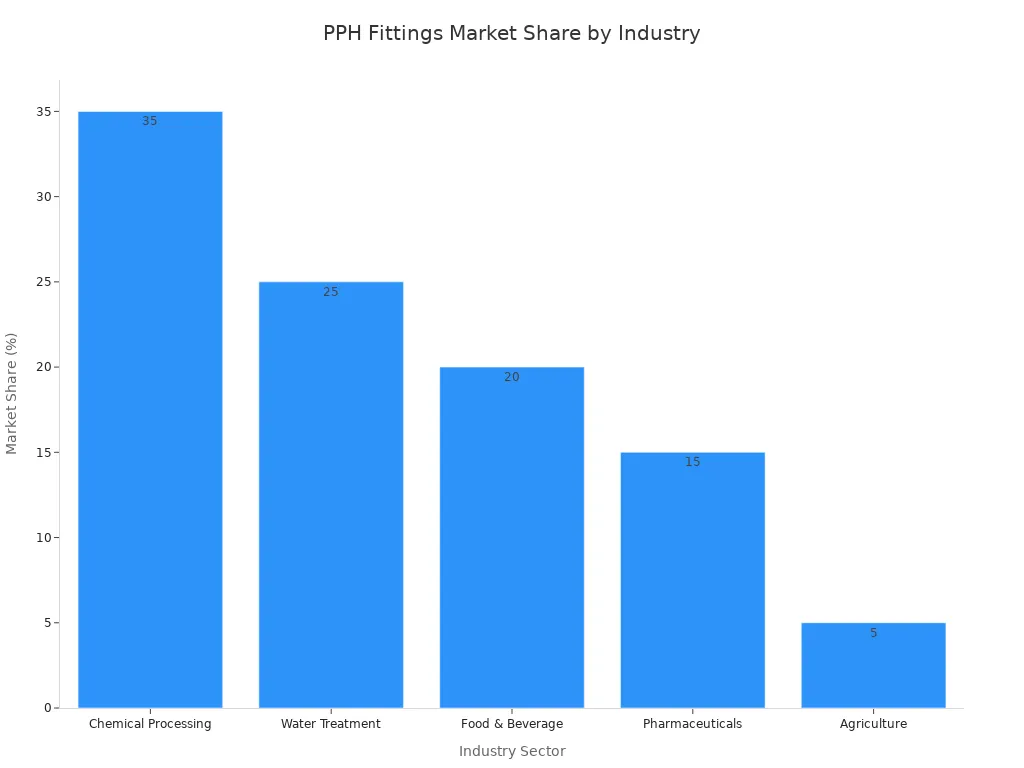
| Industry Sector | Estimated Market Share (%) |
|---|---|
| Chemical Processing | ~35 |
| Water Treatment | ~25 |
| Food & Beverage | ~20 |
| Pharmaceuticals | ~15 |
| Agriculture | ~5 |
Material Innovations and Price Trends
Manufacturers continue refining PPH fitting designs. Advanced molding techniques create smoother internal surfaces that reduce pressure loss. Improved joint geometries simplify installation while maintaining seal integrity. These innovations help PPH fittings compete against metal alternatives on performance and total ownership cost.
Price trends track raw material costs. Polypropylene resin prices fluctuate with petroleum market conditions. However, the extended service life of PPH fittings offsets initial purchase expenses. Facilities save on maintenance and replacement costs over time, making these products economically attractive despite periodic price adjustments.
Flanges, Valves, and Unions
High-Pressure Application Requirements
Flanges, valves, and unions serve critical functions in high-pressure piping systems. These components let operators isolate sections, regulate flow, and perform maintenance without dismantling entire networks. High-pressure applications demand robust construction and precise manufacturing tolerances to prevent leaks and failures.
The PPH market for these components expands as industrial facilities replace metal systems with plastic alternatives. PPH flanges provide secure connections that withstand substantial operating pressures within the material's rated range. Valves manufactured from PPH resist corrosion while maintaining flow control. Unions enable quick disconnection for cleaning or repair, reducing downtime in continuous processing operations.
Regional Variations in Adoption
Adoption patterns differ across regions. Asia-Pacific leads in new installations as industrial expansion drives demand for complete piping systems. North America and Europe focus on replacement and upgrade projects in existing facilities. These mature markets prioritize compliance with strict quality standards and environmental regulations.
Emerging economies in Southeast Asia and Latin America show increasing adoption rates. Infrastructure development projects create steady demand for reliable piping components. Local manufacturers expand production capacity while international suppliers establish regional distribution networks.
PPH Material Grades and Their Impact
Homopolymer vs. Copolymer Properties
PPH material comes in different grades affecting performance. Homopolymer polypropylene (PPH) offers excellent chemical resistance and high mechanical strength, suiting applications with aggressive chemicals and demanding environments. Copolymer polypropylene (PP-R/PP-B) provides improved impact resistance at lower temperatures, working well where mechanical stress or cold conditions challenge the system.
The choice between homopolymer and copolymer affects overall system performance. Homopolymer PPH delivers superior resistance to oxidation and chemical attack. Copolymer versions offer better flexibility and toughness. Each grade serves specific applications based on operating conditions and fluid characteristics.
Selection Criteria for Industrial Use
Industrial buyers evaluate several factors when selecting PPH grades. Operating temperature ranges determine which grade performs reliably. Chemical compatibility charts guide material selection for specific fluids. Pressure requirements influence wall thickness and fitting design. Installation conditions, including ambient temperature and UV exposure, also affect grade selection.
Changzhou Xita produces a comprehensive PPR/PPH Piping System addressing these criteria. Their products meet international standards such as ISO 15494 (industrial thermoplastics piping systems including polypropylene) and ASTM F2389 (pressure-rated polypropylene piping systems).[2][3] The system supports heat fusion and socket welding connections, creating leak-resistant joints. Xita's PPH fittings serve industries requiring high corrosion resistance and strict purity standards.
Market Segmentation by Application
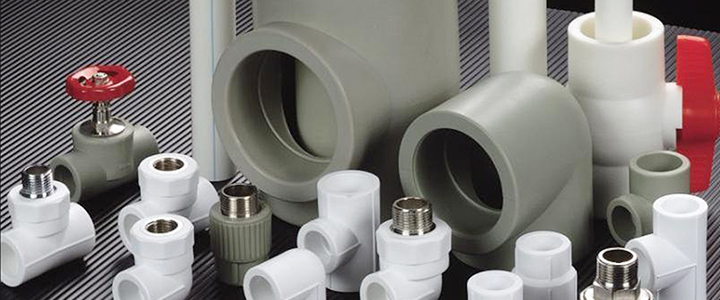
The PPH pipe fittings market serves diverse industries, each with distinct fluid handling requirements. Understanding these segments helps manufacturers tailor products and stakeholders identify growth opportunities. Major sectors include electronics/semiconductor, pharmaceutical, chemical processing, and wastewater treatment.
The following outlines key application segments and their primary uses:
Electronics/Semiconductor: Provides insulation and protective conduits for cooling systems and chemical transport.
Pharmaceutical: Ensures hygiene and reliability in fluid transfer, meeting strict purity standards.
Chemical Industry: Benefits from PPH's corrosion resistance for safe handling of aggressive substances.
Wastewater Treatment: Used for management of wastewater systems, including treatment and distribution.
Others: Additional sectors such as automotive, agriculture, and food & beverage.
Chemical Processing and Industrial Fluids
Corrosion Resistance and Safety Standards
Chemical processing plants rely on PPH pipe fittings to transfer corrosive fluids safely. The homopolymer structure resists acids, alkalis, and industrial solvents. This property prevents leaks and contamination, protecting workers and the environment. Safety standards mandate reliable piping systems, and PPH meets these requirements with its long service life and low maintenance.
Demand in this segment is strong. The market is projected to grow at a healthy CAGR through the forecast period. Key drivers include increasing industrialization, efficient water management awareness, and strict regulations regarding safety and environmental sustainability. PPH products are favored in chemicals, pharmaceuticals, and water treatment for their chemical resistance and durability.
Growth in Specialty Chemical Production
Specialty chemical production expands globally, driving demand for high-performance piping. PPH pipe systems handle a wide range of corrosive fluids, from acids to solvents. This versatility makes them ideal for processing plants. Growth of specialty chemicals, such as advanced polymers and agrochemicals, creates opportunities for PPH manufacturers. As production volumes rise, the need for reliable, corrosion-resistant piping increases.
Water Treatment and Distribution Systems
Infrastructure Investments and Replacement Demand
Water treatment facilities require durable piping to manage wastewater and distribute clean water. PPH pipe fittings offer a service life of approximately 25–50+ years depending on application conditions, with lower maintenance than metal pipes, accelerating replacement in municipal and industrial facilities. The global wastewater treatment equipment market was valued at over USD 50 billion in 2024, and regulations mandate improved management, driving demand for corrosion-resistant PPH pipes.
Asia-Pacific is the fastest-growing market due to rapid industrialization, urbanization, and infrastructure investment in China and India, especially in water supply and wastewater plants. Developing economies like Indonesia, Vietnam, and Nigeria show strong growth in industrial construction, including water treatment plants, with limited local PPH manufacturing. This presents growth potential for new projects.
Environmental Regulations Driving Adoption
Stricter environmental regulations push industries and municipalities toward safer chemical handling and water treatment. PPH pipe systems meet requirements through leak-resistant joints and corrosion resistance. Governments worldwide invest in upgrading aging water infrastructure, replacing outdated metal pipes with plastic alternatives. This regulatory push sustains demand for PPH fittings in water treatment.
Semiconductor and Pharmaceutical Manufacturing
Purity Requirements and Material Compliance
Semiconductor and pharmaceutical manufacturing demand ultra-pure piping. Any contamination can ruin products or compromise safety. PPH pipe fittings meet these standards because they do not leach significant contaminants into the fluid stream. The smooth inner surface prevents scale buildup and maintains flow efficiency. Regulatory bodies require compliance with strict material standards, and properly formulated PPH meets these requirements.
The pharmaceutical sector relies on PPH for clean fluid transport. The electronics industry uses PPH for cooling systems in semiconductor fabrication. These sectors drive premium product demand, supporting higher average selling prices.
Technological Advancements and Market Potential
Technological advancements in semiconductor fabrication and pharmaceutical production create opportunities for PPH pipe fittings. As manufacturing processes become more precise, the need for reliable, high-purity piping increases. Market potential in these sectors is significant, with growth rates exceeding traditional industrial applications. Manufacturers invest in R&D to develop specialized PPH products meeting high-tech industry needs.
Regional Market Analysis and Growth Trends
The PPH pipe & fittings market shows distinct patterns across regions. Each area presents unique opportunities shaped by local economic conditions and industrial activity. Asia-Pacific is the dominant force. Mature markets in North America and Europe contribute steady replacement demand. Emerging regions in the Middle East, Africa, and Latin America offer growing potential tied to infrastructure development.
Asia-Pacific: Dominant Market and Growth Hub
Asia-Pacific dominates the global market. Rapid urbanization and industrial expansion in China, India, and Southeast Asia drive substantial demand. Government initiatives such as India's Smart Cities Mission and infrastructure investment programs catalyze growth. Chemical processing expansion requires high-performance PPH piping. Increasing environmental regulations favor corrosion-resistant materials. The following table shows the market value trajectory for the region.
| Year | Estimated Market Value (USD Billion) |
|---|---|
| 2024 | ~2.5 (global) |
| 2025 | ~2.8 (global estimate) |
| 2034 (projected) | ~4.2 (global) |
| CAGR (2025–2034) | ~6.2% |
China and India: Industrial Expansion Drivers
China remains the largest market in the region. Ongoing industrial modernization creates consistent demand for corrosion-resistant piping. India follows with urban infrastructure projects. Both countries invest heavily in water treatment facilities and chemical processing plants. These sectors require reliable PPH pipe systems meeting quality standards. Growing populations also push demand for improved water infrastructure.
Southeast Asia: Emerging Opportunities
Southeast Asian countries present emerging growth. Vietnam, Indonesia, and Thailand expand manufacturing bases. These nations invest in new industrial parks and water treatment infrastructure. The growing middle class drives demand for improved water distribution. Local manufacturers establish production capacity to meet rising needs. This region offers potential for new entrants.
North America and Europe: Mature Markets
Stringent Quality Standards and Regulations
North America and Europe represent mature markets. Strict regulations govern material quality and installation practices. Manufacturers must comply with standards such as ASTM F2389 and ISO 15494. These regulations ensure reliable performance. Established players maintain strong positions through compliance and certifications. New entrants face barriers due to high compliance costs.
Upgrade Cycles and Replacement Demand
Replacement demand drives most activity in these regions. Aging infrastructure in water treatment and chemical facilities requires upgrading. Many facilities replace metal piping with PPH alternatives. The long service life of PPH reduces maintenance costs. These upgrade cycles provide steady demand. Facility managers prioritize reliability in selection.
Middle East, Africa, and Latin America
Oil and Gas Sector Influence
The Middle East and Africa show growth potential. Oil and gas projects and desalination plants drive demand for PPH pipe fittings. Gulf Cooperation Council countries invest in water infrastructure. Africa faces urban water challenges requiring new piping systems. The following table summarizes regional characteristics.
| Region | Estimated Market Share | Key Demand Drivers |
|---|---|---|
| Latin America | ~6% | Urban housing, energy projects (Brazil, Mexico), infrastructure replacement |
| Middle East & Africa | ~5% | Oil & gas, desalination (GCC), urban water projects (Africa) |
| Middle East & Africa (growth) | Fastest-growing region | Oil & gas projects, desalination plants, government-led infrastructure |
Infrastructure Development and Urbanization
Latin America shows moderate growth driven by water and sanitation projects. Brazil and Mexico lead in energy and housing investments. The infrastructure gap creates replacement demand. Governments provide incentives for foreign investment. These efforts help diversify supply routes and strengthen global distribution.
Market Trends Shaping the PPH Industry
Rising Demand for Corrosion-Resistant Materials
Shift from Metal to Plastic Piping Systems
Industrial facilities continue replacing metal piping with PPH alternatives. Steel and iron systems corrode when handling aggressive chemicals, requiring frequent maintenance and replacement. PPH pipe resists corrosion across a wide range of fluids, from strong acids to alkaline solutions. This advantage drives the shift toward plastic piping systems in chemical plants, water treatment, and manufacturing.
The transition reflects broader industrial preference for materials delivering reliable performance over decades. Metal systems often fail at connection points where corrosion concentrates. PPH fittings eliminate this weakness through homogeneous construction resisting chemical attack. Engineers now specify plastic systems for new installations rather than defaulting to metal.
Long-Term Cost Benefits and Durability
The economic case strengthens with each maintenance cycle avoided. Metal systems require regular inspection, protective coatings, and eventual replacement. PPH pipe eliminates these recurring expenses through inherent material resistance. Facilities switching to plastic report significant reductions in maintenance labor and replacement costs.
PPH components maintain mechanical properties after years of exposure to corrosive fluids. The smooth internal surface prevents scale buildup restricting flow and increasing pumping energy. This combination of longevity and efficiency makes PPH systems economically rational for long-term operations.
Automation and Smart Manufacturing Integration
Impact on Production Efficiency
Manufacturers integrate automation throughout production lines. Computer-controlled injection molding produces components with consistent dimensions and tolerances. Automated quality inspection detects defects immediately, reducing waste and ensuring every fitting meets specification. These technologies increase throughput while maintaining quality standards.
Smart manufacturing systems collect data from every production stage. This helps optimize parameters, reduce energy consumption, and predict maintenance needs. The result is a more efficient process delivering reliable products at competitive prices. Automation also enables quick response to changing demand patterns.
Adoption of Advanced Welding Technologies
Installation benefits from advances in welding technology. Modern heat fusion equipment maintains precise temperature control, creating consistent, leak-resistant joints. Automated welding machines reduce human error and speed installation. These technologies prove valuable in large-scale industrial projects with hundreds of joints.
Socket welding and butt fusion techniques improve with digital temperature monitoring and pressure control. Installers achieve joint integrity matching or exceeding the pipe material itself. These advances reduce installation time and minimize joint failure risk, making PPH systems more attractive for critical applications.
Sustainability and Recyclability Trends
Eco-Friendly Material Preferences
Manufacturers increasingly use recycled polypropylene and explore sustainable formulations to reduce environmental footprint. PPH fittings are recyclable and energy-efficient to manufacture, aligning with industry shifts toward sustainable materials. Buyers now evaluate piping systems based on environmental impact alongside performance.
The table below compares material options across key sustainability metrics:
| Material Type | Typical Longevity (Years) | Recyclability | Regulatory Context |
|---|---|---|---|
| PPH / PP | 25–50+ | High (PP is widely recyclable) | EU circular economy policies encourage plastic recycling |
| PVC | 25–40 | Limited (additives complicate recycling) | Less aligned with some circular economy goals |
| Metal (steel/cast iron) | 50–75+ | High (scrap metal recycling) | Higher embodied carbon; corrosion requires coatings |
Regulatory Push for Green Solutions
Stringent standards influence PPH adoption. Manufacturers invest in certifications to meet international environmental standards. These build trust and facilitate penetration in regulated industries such as healthcare and wastewater. Industry trends indicate a shift toward piping solutions combining performance with environmental impact. Future innovations focus on optimizing sustainability metrics. Companies prioritizing sustainability position themselves favorably for regulatory developments.
The convergence of trends shapes market evolution. Corrosion resistance drives substitution, automation improves production economics, and sustainability influences material selection. These forces create a dynamic environment where manufacturers must continuously adapt.
Key Drivers and Challenges in the PPH Market
Drivers Fueling Market Expansion
Industrial Growth and Infrastructure Projects
The market benefits from expanding industrial activity worldwide. Factories and processing plants require reliable piping for fluid transport. The chemical industry drives demand for corrosion-resistant materials. New manufacturing facilities in Asia-Pacific create opportunities. Urban infrastructure development supports expansion. Cities invest in distribution networks and industrial zones. Construction of chemical plants and water treatment facilities increases PPH component demand.
Government Initiatives for Water and Chemical Safety
Governments implement stricter regulations for water quality and chemical handling. These policies push industries toward safer piping materials. PPH meets requirements for chemical resistance and purity. The wastewater sector benefits from government funding for system improvements. Many countries fund upgrades to aging infrastructure. These investments create sustained need for PPH pipes and fittings.
Challenges Hindering Market Growth
Fluctuating Raw Material Prices
Polypropylene resin prices change with oil conditions. This volatility affects production costs. Companies must manage fluctuations to maintain profitability. Price increases can slow growth in price-sensitive segments. Long-term benefits often offset short-term cost challenges. Manufacturers implement hedging strategies to stabilize input costs.
Competition from Alternative Materials
PVC and CPVC pipes compete in some applications, offering lower costs in certain use cases. PPH provides superior chemical resistance and temperature tolerance. The choice depends on application requirements. PPH maintains position in demanding environments where performance matters. PPH commands premium prices in high-purity and durability applications. This landscape requires continuous innovation.
Supply Chain Disruptions and Logistics Costs
Global supply chain issues affect the market. Transportation costs and delivery delays create challenges. Companies develop resilient supply chains. Logistics challenges can temporarily slow expansion. Manufacturers invest in regional production facilities to reduce dependency on long supply lines.
Competitive Landscape and Major Players
The global PPH pipe fittings market features established multinationals and specialized regional manufacturers. Companies compete on product quality, technical innovation, and supply chain reliability.
Leading Manufacturers and Their Strategies
Product Portfolio and Innovation Focus
Leading manufacturers differentiate through comprehensive product lines and innovation. Major players include Georg Fischer, IPEX, AGRU, and FIP, among others. These companies invest in R&D to improve material formulations and joint technologies.
The competitive landscape also includes:
Georg Fischer (GF Piping Systems)
IPEX
AGRU
FIP
ASVA Group
Specialized regional and niche manufacturers
These manufacturers serve chemical processing, water treatment, and semiconductor fabrication. Innovation focuses on enhancing corrosion resistance, extending service life, and simplifying installation.
Mergers, Acquisitions, and Partnerships
Strategic consolidation shapes the environment. Larger companies acquire specialists to expand offerings and reach. Partnerships with raw material suppliers secure stable resin supplies. Distribution agreements extend market presence. These activities strengthen market structure and improve customer access.
Market Share Analysis and Regional Footprint
Key Players' Global Presence
Major manufacturers operate facilities and sales offices worldwide. Georg Fischer maintains operations across Europe, Asia, and the Americas. IPEX serves North America with localized manufacturing. AGRU operates globally with production in Europe, Asia, and the United States. This footprint enables quick response to regional demand and supply chain challenges.
Changzhou Xita Plastic Products Co., Ltd. represents a notable manufacturer. The company produces a comprehensive PPR/PPH Piping System meeting international quality standards. Xita's production capacity includes PVC, PPH, and PVDF product lines. The company follows ISO 9001 quality standards, ensuring consistent reliability. This capability positions Xita as a significant supplier for industrial piping.
Emerging Players and Niche Specialists
Emerging manufacturers target specific segments with specialized products. Niche players complement majors by addressing specialized requirements. The landscape evolves as new players enter and existing companies expand. Buyers benefit through improved quality and competitive pricing. Selecting a reliable manufacturer requires evaluating capacity, certifications, and application expertise.
The PPH pipe & fittings market presents strong growth prospects through 2031. Industrialization, chemical processing demand, and infrastructure investments drive growth. Companies should focus on Asia-Pacific expansion, R&D for high-purity fittings, and eco-friendly solutions. Selecting reliable manufacturers remains critical. Changzhou Xita offers a proven PPR/PPH Piping System meeting international standards.
FAQ
What is the projected market size for PPH pipe fittings through 2031?
The PPH pipe & fittings market is estimated at approximately USD 2.5 billion in 2025 and projected to expand toward USD 4.2 billion by 2034, representing a CAGR of about 6.2%. Figures vary by research firm due to differing scope definitions. Demand comes from chemical processing, water treatment, and semiconductor manufacturing.
What factors drive market growth for PPH piping systems?
Industrial expansion in Asia-Pacific leads growth. Government infrastructure investments in water distribution create steady demand. Environmental regulations push industries toward corrosion-resistant materials. The shift from metal to plastic piping accelerates adoption across chemical and pharmaceutical facilities.
Which regions hold the largest market share?
Asia-Pacific dominates with rapid industrialization in China and India. North America and Europe contribute through replacement and upgrade cycles. The Middle East and Africa show strong growth potential due to oil & gas projects and desalination plants.
What are the primary applications for PPH pipe fittings?
Chemical processing represents the largest application segment at approximately 35% of demand. Water treatment follows at ~25%. Food & beverage accounts for ~20%. Pharmaceutical manufacturing contributes ~15%, while agriculture represents ~5%.
How does PPH compare to alternative piping materials?
PPH offers strong chemical resistance compared to PVC or CPVC. The homopolymer structure withstands aggressive acids and industrial solvents. PPH systems provide longer service life and lower maintenance than metal in corrosive environments. These advantages justify the premium in demanding applications.
What challenges affect the PPH pipe & fittings market?
Fluctuating polypropylene resin prices create cost volatility. Competition from PVC and CPVC pressures pricing in sensitive segments. Supply chain disruptions and logistics costs affect availability. Manufacturers address these through regional production and strategic sourcing.
How should buyers evaluate PPH pipe fitting manufacturers?
Buyers should assess production capacity, quality certifications, and application expertise. ISO 9001 compliance ensures consistent reliability. International standards such as ISO 15494 and ASTM F2389 verify dimensional and performance accuracy. A manufacturer with diverse material capabilities demonstrates technical competence.
What is the outlook for water treatment applications?
Water treatment represents a growing segment. Aging infrastructure in developed nations requires replacement with corrosion-resistant materials. Developing economies invest in new distribution networks. Environmental regulations mandate improved wastewater management, creating sustained demand for PPH fittings.
References & Sources
Verified Market Reports. "PPH Pipe Fittings Market — Global Industry Analysis and Forecast." https://www.verifiedmarketreports.com/product/pph-pipe-fittings-market/
International Organization for Standardization (ISO). "ISO 15494 — Plastics piping systems for industrial applications: Polybutene (PB), polyethylene (PE), polypropylene (PP) — Specifications for components and the system." https://www.iso.org/obp/ui/#iso:std:iso:15494:ed-1:en
ASTM International. "ASTM F2389 — Standard Specification for Pressure-rated Polypropylene (PP) Piping Systems." https://www.astm.org/f2389-23.html

